
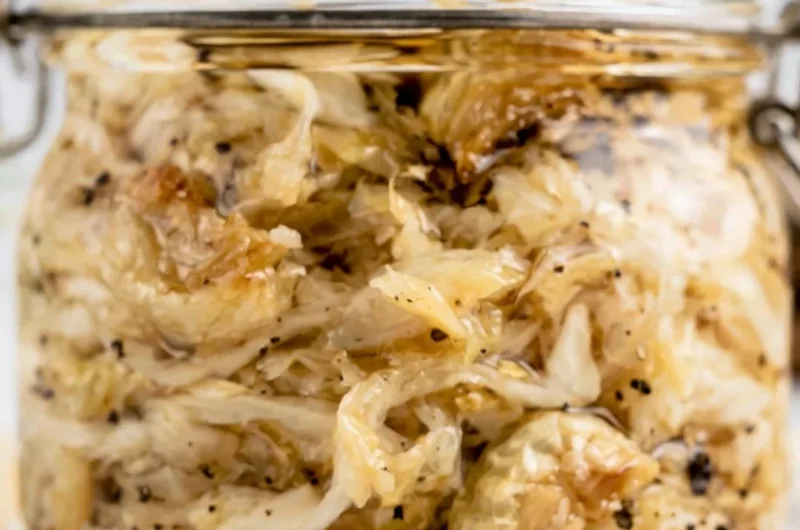
Roasted Garlic Sauerkraut: A Cozy Fermentation Adventure
There’s something utterly comforting about walking into a kitchen filled with the warm, nutty aroma of roasted garlic. It takes me back to family dinners where we’d gather around the table, the clinks of forks and laughter weaving together memories that linger long after the last bite is gone. Today, I want to share a delightful recipe for Roasted Garlic Sauerkraut that’s not just a delicious side dish but a warm hug for your taste buds. This easy fermented treat adds a tangy zest to any meal, perfect for those seeking a healthy, gut-friendly option.
As the days grow cooler, this recipe invites a little warmth into our lives. It’s the perfect way to embrace the spirit of the season, making it a fantastic addition to your cozy fall recipes. Plus, if you’re a fan of easy weeknight dinner ideas, this Roasted Garlic Sauerkraut is something you’ll want to pin for later!
Why You’ll Love This Recipe
- Gut-Healthy: Packed with probiotics that are beneficial for digestive health, making it not just delicious, but nutritious.
- Easy to Make: No complicated steps or special tools are required, just your kitchen basics!
- Versatile Serving Options: Perfect as a tangy side dish, on a sandwich, or even in salads.
- Flavorful Twist: The roasted garlic adds a rich, mellow sweetness that elevates traditional sauerkraut.
- Great Make-Ahead Recipe: Prepare in advance and let it ferment while you plan your cozy meals.
Ingredients You’ll Need for Roasted Garlic Sauerkraut
To create your own Roasted Garlic Sauerkraut, gather these simple ingredients:
- 500 grams cabbage, chopped
- 50 grams garlic, roasted
- 1 teaspoon black pepper
- 200 grams water
- 20 grams sea salt
Let’s Make It Together
Creating your Roasted Garlic Sauerkraut is a lovely way to spend an afternoon. Follow these simple steps to craft your tangy, flavorful creation:
- Roast the garlic by cutting a whole garlic bulb in half and placing it face down on a parchment-paper-lined pan at 400 degrees F for 30 minutes. Let cool and then squeeze the cloves out into a bowl.
- Wash your fermentation equipment with warm, soapy water to ensure everything is clean and ready for your sauerkraut.
- Remove the outer leaves of the cabbage, rinse it well, and chop it into bite-sized pieces.
- Measure out all ingredients for accuracy and to make the assembly process flow smoothly.
- In a large bowl, combine the chopped cabbage, roasted garlic cloves, black pepper, water, and sea salt. Using your hands, massage the cabbage to release its juices, making it tender and juicy.
- Pack the mixture tightly into a clean jar, ensuring that everything is submerged under the liquid to prevent spoilage.
- Add a fermentation weight on top of the cabbage to keep it submerged.
- Cover the jar with a rust-proof lid, leaving it slightly loose to allow gases to escape during fermentation.
- Allow your sauerkraut to ferment at room temperature for 21-28 days. Press down on the weight gently if it rises above the liquid.
- Once fermented to your satisfaction, transfer the jar to the refrigerator to halt the fermentation process. Enjoy your delightfully tangy creation!
Fun Ways to Customize It
Feel free to get creative! Here are a few delicious variations to try:
- Zesty Lemon & Dill: Add zesty lemon juice and fresh dill to your cabbage mixture for a bright, refreshing flavor that dances on your palate.
- Spicy Kick: Mix in a teaspoon of red chili flakes for a delightful heat that complements the mellow garlic beautifully.
- Crisp Apple & Ginger: For a sweet twist, add grated apple and fresh ginger for a crunchy, tangy element that’s irresistible.
- Savory Caraway Seeds: Toss in a teaspoon of caraway seeds for a classically inspired German flavor that’s rich and aromatic.
Chef Emma’s Helpful Tips
To make your sauerkraut-making experience even smoother, keep these handy tips in mind:
- Make it Ahead: Don’t be afraid to prep a few jars at once! Sauerkraut can last for months in the refrigerator, allowing you to enjoy it throughout the season.
- Substitute Sea Salt with Himalayan Pink Salt: If you prefer, opt for Himalayan pink salt, which adds a subtle depth to the flavor profile.
- Monitoring Fermentation: Taste your sauerkraut after a couple of weeks and adjust the fermentation time based on your preference for tanginess.
- Storage Suggestions: Store any leftovers in an airtight container in the fridge, where it can keep for several months.
What’s Inside – Nutrition Breakdown
Nutritional Information per serving (1 tablespoon):
- Calories: 15
- Carbohydrates: 3g
- Sugar: 1g
- Fat: <1g
- Protein: <1g
- Sodium: 280mg
Frequently Asked Questions
Can I make this ahead?
Absolutely! This sauerkraut can be made weeks in advance as it lasts well in the refrigerator.
Can I use different ingredients?
Yes! Feel free to experiment with veggies and spices based on your preferences and what you have on hand.
How do I store leftovers?
Keep your remaining sauerkraut in an airtight container in the refrigerator for a long-lasting, delightful addition to your meals.
How long does it last?
When stored properly, homemade sauerkraut can last several months in the fridge.
A Cozy Closing Note
Roasted Garlic Sauerkraut is more than just a recipe; it’s an experience that blends flavors, health, and memories in the warm atmosphere of a bustling kitchen. It’s a wonderful reminder of the love and care that goes into every meal. So, grab your ingredients and let’s dive into this delightful fermentation journey together! Save this Roasted Garlic Sauerkraut to your Pinterest board so it’s ready when you need a cozy treat! Happy cooking!